
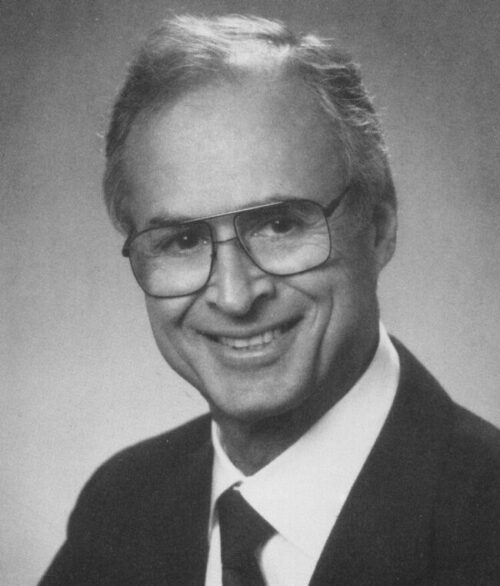
Rabbi Stanley Kessler
One moment Rabbi Stanley Kessler of Beth El Temple is attending a rabbinic conference in upstate New York with over 300 attendees and the next moment he is catapulted into the annals of history.
It’s May 1963 and the rabbis become aware through national television coverage that the freedom fighters’ peaceful civil rights demonstration in Birmingham, Alabama turns into a chaotic scene. They see the demonstrators attacked by dogs and forcefully sprayed with fire hoses. The immediate reaction of a colleague, according to Rabbi Kessler was, “what are we doing here when all of this is going on. We should be down there with them.” In an oral history interview for the Jewish Historical Society of Greater Hartford, Rabbi Kessler recounted: “some of us said okay, let’s go.”
This call to action was taken up by 19 rabbis who were on a flight that same day to Birmingham. The media ran the story of this group of rabbis flying to Alabama on the spur of the moment to support the freedom fighter. This generated so much attention that a delegation of more than 30 members of Dr. Martin Luther King Jr.’s group met the contingent at the airport. Already a long day behind them, Rabbi Kessler recalled being briefed about the next day’s schedule and then looking for hotel accommodations. “It was already about 1:00 am and we set out to find a place to stay. There wasn’t a hotel in the city that would accept us. There were no rooms to be had, so they said. But we knew that was not true. And we went up to the only place that you might be able to be bedded down, which was in the motel where Dr. King was staying.”
Dr. King met with the rabbis the next day and told them they were the “first group of clergy in the country as a group that has come together with me.” Rabbi Kessler noted that was something they had not thought about, but it resonated and was mentioned as events transpired. Also at this meeting, Rabbi Kessler unexpectedly discovered a common bond with Dr. King through the teachings of Israeli philosopher Martin Buber, with whom Rabbi Kessler had studied at Hebrew University in Jerusalem. Dr. King spoke about being deeply influenced by Dr. Buber’s famous “I-thou” position – seeing a person not as an “it, but as a thou.” Commenting on this discovery many years later, Rabbi Kessler said, “it was all the more meaningful to me at the time that there was this kind of influence upon the life of somebody who was to play such a profound role in the history of our country.”
Within 24-hours of their arrival, the rabbis participated in daytime and nighttime events, along with the freedom fighters and were subjected to violence, prompting Dr. King’s delegation to beg them to go home the very next day. “We could go home, but the Jewish community left there would have to face the consequences of Jews, of rabbis, being part of what was transpiring at the time. We had to make a choice at that particular juncture,” explained Rabbi Kessler. They decided to stay and within a few hours had a plan detailing how to move forward. For the next three nights the rabbis took turns speaking in some of the largest churches in the south, one filled with 1,700 congregants. Rabbi Kessler recalled people “literally weeping” at the rabbis’ words as they articulated the horrors of Jews enslaved in Egypt. Because of that historic experience and remembrance, “how could they not help but be representative of our people in being together with those participating in this.”
In August 1963, Rabbi Kessler went to the March on Washington where Dr. King gave his iconic “I Have a Dream” speech. Once again, Rabbi Kessler was welcomed with open arms and given a special place to sit on the podium to witness Dr. King make history.